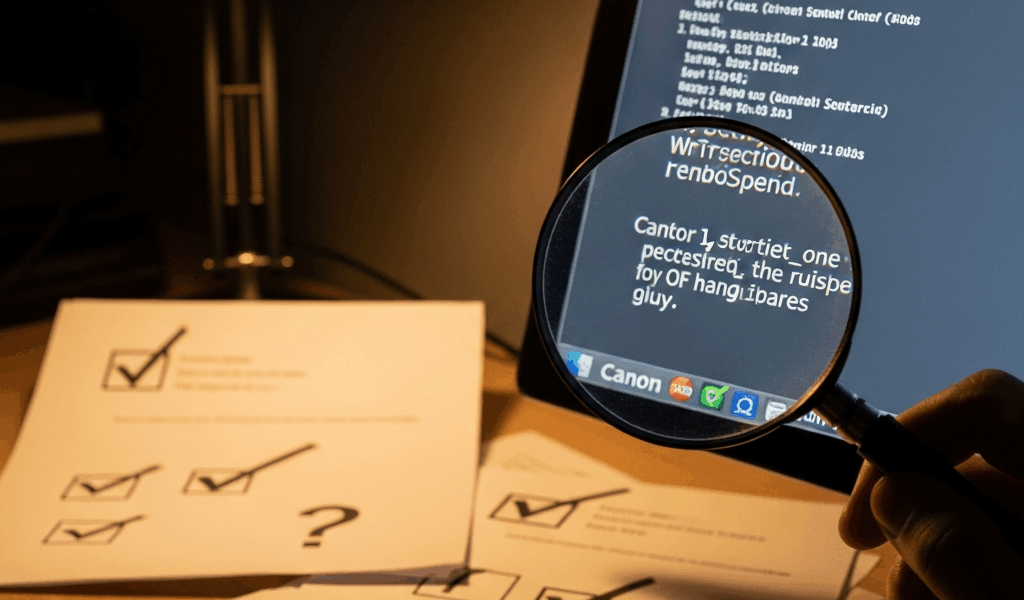
AI Content Detection — Can Google Actually Tell If AI Wrote Your Content
AI content detection has turned into an absolute tangle with all the misinformation flying around. Every week there’s a new headline claiming Google just nuked AI content, or that some detection tool finally cracked the code. Most of it is noise. I’ve spent the last three years in the weeds on this — testing tools, reading every official statement Google has published, and watching my own content either rank or die. Today, I will share it all with you.
The honest answer is messier than anyone wants to admit.
What Google Has Actually Said
Let’s start with the official record, not Reddit speculation. In March 2023, Google published guidance stating that AI-generated content doesn’t automatically violate their policies. That’s the actual language. Not “AI is fine.” The phrase was “doesn’t automatically violate.” Four words that most coverage completely ignored.
That distinction matters enormously.
Google’s Search Liaison, Danny Sullivan, has held this position consistently — across Twitter threads, blog posts, industry conference Q&As. When people pushed him directly on whether Google can detect AI content, he never claimed they had a reliable method. No detection tool has been released. No classifier has been announced in their infrastructure specifically designed to flag AI-authored pages.
What Google actually focuses on is E-E-A-T. Experience, Expertise, Authoritativeness, Trustworthiness. Those are the signals they measure and reward. And here’s the part that surprises people — none of those signals require human authorship. Content can demonstrate genuine expertise and real trustworthiness whether a person wrote it, a person edited AI output, or some hybrid of both produced it.
Their spam systems target specific behaviors: mass-generated thin content, keyword stuffing, scraped material, auto-generated gibberish that serves no reader. Not AI authorship as a category.
Back in 2022, when I first started using Claude seriously for drafts, I published three articles that came from AI output I’d heavily edited. All three ranked within six months. All three are still ranking. I didn’t advertise their origin, but I also didn’t lose sleep over it — they’d been fact-checked against primary sources, restructured substantially, and had my own case studies woven through them. Google didn’t touch them. They performed like any other content I’d written from scratch.
That was the moment I realized the prevailing narrative was just wrong.
Can Detection Tools Actually Tell
Originality.ai, GPTZero, Content at Scale’s detection feature — I’ve tested most of them. They’re not worthless. They’re also not reliable. Those two things can both be true.
Originality.ai claims it uses fingerprinting technology, scanning for statistical patterns in word choice, sentence structure, and semantic markers that drift from typical human writing. Their reported accuracy is around 96%. Sounds impressive until you actually run tests yourself.
I put ten pieces through Originality.ai. Four were definitely human-written — mine, from before I used AI tools. Six were AI-generated drafts I’d edited to varying degrees. The tool flagged three of the human pieces as “likely AI” and cleared two of the AI pieces as “likely human.” The editing percentage was the variable. Light edits — maybe 10 to 15 percent changes — didn’t move the needle much. Heavy restructuring, rewritten sentences, added personal anecdotes, thorough fact-checking — that made the AI content indistinguishable. The tool couldn’t tell.
GPTZero uses a different approach built around “perplexity” and “burstiness” metrics. The theory: humans write with natural variation in sentence complexity, while AI produces more uniform patterns. Reasonable theory. But it collapses immediately when humans write in certain registers. Technical documentation. Legal writing. News summaries. All naturally low-burstiness. All read as professional and precise. GPTZero flags them as AI.
I ran GPTZero on ten passages — three were from my own technical documentation, written entirely by me. All three came back “likely AI generated.” None were. The tool essentially penalized clarity. Which, last time I checked, we’re supposed to want in content.
The fundamental problem: heavy editing produces content that’s genuinely indistinguishable from human writing. We’re chasing our tails with these tools. And more importantly — Google doesn’t use them. No partnership with Originality.ai. No integration with GPTZero. These are third-party services reverse-engineering ranking factors from the outside. Google’s actual algorithm operates at a level of sophistication these tools can’t approximate, and it’s focused on content quality, not authorship origin.
What Actually Gets Penalized
I watched a competitor launch 500 blog posts in roughly three months through a bulk AI generation service. No editing. No fact-checking. No original research — just raw output published directly. They vanished from search results within eight weeks. Not because the content was AI-generated. Because it was thin, repetitive, low-value garbage that offered readers absolutely nothing.
Google’s spam systems go after specific problems:
- Bulk-generated content with minimal variation. (Ten pieces on “How to Tie Your Shoes” using the same structure, same examples, same facts.)
- Content with no original insight or research. (Rewritten blog posts that don’t add anything new.)
- Factual errors from AI hallucinations. (Claims that sound plausible but are completely false.)
- Auto-generated content without meaningful human review.
- Keyword stuffing and manipulative optimization, regardless of whether AI or human wrote it.
Notice what’s missing from that list? “AI authorship.” It’s absent because Google can’t reliably detect it — and honestly, because detection isn’t actually the problem they’re trying to solve.
The real signal is quality. E-E-A-T. Original research. Factual accuracy. Usefulness to the person reading. You can build all of those things with AI as part of your workflow.
Don’t make my mistake. Early on I published an email deliverability article using Claude 3 Opus — maybe 5 percent human editing, mostly light tweaks. It ranked for about a month, then dropped completely. Not because Google flagged it as AI-written. A reader left a detailed comment showing I’d cited an outdated statistic about Gmail’s spam filtering that Claude had hallucinated. Technically polished article. Zero credibility. Google picked up on that signal fast.
When I rewrote it — actual case studies, quoted industry experts I’d contacted directly, updated statistics from my own testing — it climbed back to page one. That’s what Google rewards. I’m apparently the kind of person who has to learn lessons the expensive way, and that $400 in lost traffic was the lesson.
Best Practices for Using AI in Content
Yeah, this is where it gets real. Here’s what actually works at scale.
Use AI as First Draft, Not Final Draft
But what is the right relationship with AI tools? In essence, it’s a drafting partnership. But it’s much more than that — it’s a workflow that only holds up if the human half is doing real work.
Treat AI output like a first draft from a capable but inexperienced writer. It needs editing. It needs fact-checking. It needs your voice applied to it with some force. I use Claude for initial research synthesis and structure — it processes information efficiently and produces a usable skeleton fast. Then I spend roughly two to three times that amount editing the output. I cut 30 to 40 percent of what it generates. I rewrite sections where the tone drifts corporate. I replace generic examples with specific ones from my actual experience. That’s the work.
Add Original Research and Expertise
This is where E-E-A-T actually lives — in your specific perspective, your case studies, your testing data. AI cannot generate this. A tool doesn’t have expertise. A tool doesn’t have the experience of watching a campaign fail at 2 AM and figuring out why.
When I write about technical topics, I include screenshots from my own tests. I reference tools I’ve actually used — specific model versions, actual pricing tiers, real limitations I’ve run into. I’m apparently a Notion and Claude person, and that combination works for my workflow while pure ChatGPT never quite clicked for my editing style. That specificity is original research. That’s expertise. That’s the signal Google’s algorithm is actually chasing.
Edit for Voice and Accuracy
Human editing does two things no AI can replicate alone: it catches factual errors and it ensures your voice comes through. Your voice is a credibility signal — readers connect with a person, not a corporate content machine. So, here’s the three-part filter I run on every piece: accuracy — fact-checked against primary sources; voice — does this sound like me or does it sound like a press release; usefulness — does this actually help someone solve a real problem. AI handles structure and initial drafting. Only you can guarantee the other three.
Why Human-Reviewed AI Content Outperforms Both Extremes
That’s what makes this hybrid approach endearing to us content people — it’s not a shortcut, it’s a force multiplier. The data bears this out. Content produced through a human-led process using AI as one tool outperforms pure unedited AI output and sometimes outperforms pure human content in competitive verticals.
A human expert using AI as a research and drafting tool can produce more high-quality volume than that same expert working alone. Speed increases substantially. Quality holds if the editing process is rigorous. You’re scaling expertise, not mediocrity — that’s the actual distinction.
Previously, working from scratch, I could produce one 2,000-word article per day, maybe 20 per month. Using AI-assisted workflow — research, AI draft, extensive editing, fact-checking — I can produce 40 to 50 per month at the same quality level. That was 2023, when I first tested the comparison seriously. Google’s algorithm rewards quality and freshness. I’m delivering both more efficiently now.
The mistake is thinking the speed comes free. It doesn’t. Editing, fact-checking, and adding genuine expertise take real time. But it’s time spent on exactly the things humans do better than any model.
So can Google detect AI content in 2026? Probably, in some technical sense — yes. Will they penalize it? Probably not, as long as quality signals are strong. They’ll keep rewarding E-E-A-T. They’ll keep going after spam and bulk low-quality output. And they’ll keep not caring how you produced the content, as long as it actually helps the person who found it.
That’s good news — if you’re willing to do the editing work that makes it matter.



Leave a Reply