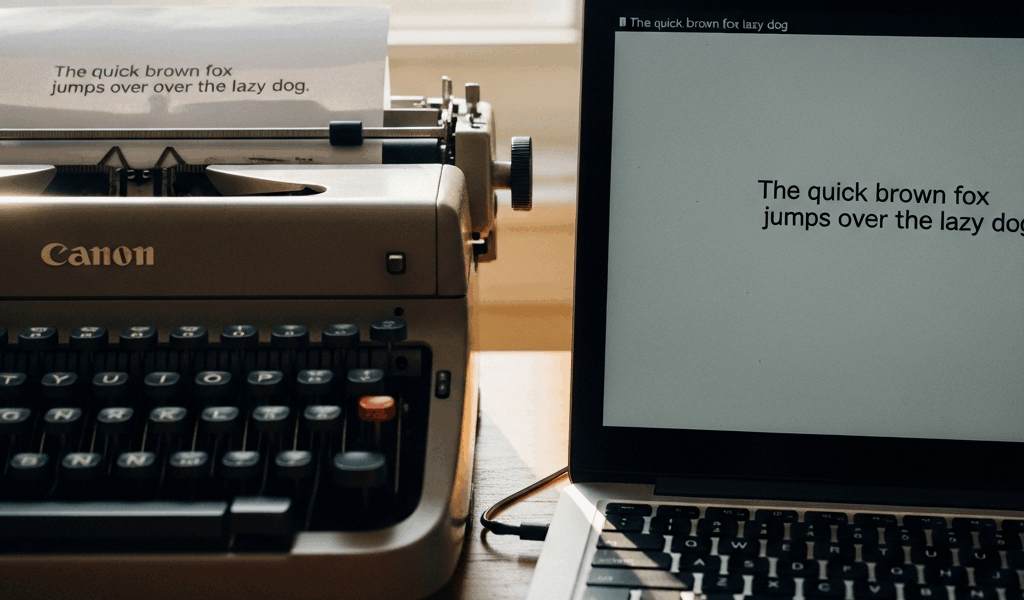
AI Writing Got weird fast With All the Bad Advice Flying Around
As someone who has spent three years editing AI-generated copy professionally, I learned everything there is to know about why it sounds fake. And today, I will share it all with you.
Here’s the thing — it’s not that AI is bad at language. It’s that AI optimizes for statistical likelihood. Safety. Predictability. Not rhythm. Not surprise. Not the kind of commitment that makes a reader lean forward instead of click away.
The tells are always the same. Always mechanical. Always fixable.
- Identical sentence lengths stacked in rows — usually sitting right around 18–22 words each, producing a numbing drone that reads like a dishwasher manual
- Hedging language scattered everywhere — “may,” “can sometimes,” “it is worth noting,” “in many cases” — phrases that make your copy sound like it was drafted by a committee afraid of consequences
- Abstract nouns doing zero work — “improve results,” “enhance efficiency,” “drive value” — words that gesture at meaning without committing to any
- Filler transitions at every paragraph start — “Furthermore,” “Moreover,” “It is important to acknowledge that” — padding that wastes your reader’s patience
None of this is your prompt’s fault. These patterns are baked into how language models predict the next token. The fix lives in editing, not generation.
The Sentence Rhythm Problem — and How to Break It
AI loves symmetry. Identical sentence length creates a drone your reader’s brain flags as fake before they even consciously register why. That’s what makes rhythm so dangerous in AI copy — it fails silently.
Here’s what robotic looks like:
“Marketing automation tools save your team hours every single week. These platforms integrate with your existing CRM and email systems. They reduce manual tasks and improve campaign performance significantly.”
Three sentences. Twenty words. Twenty-one words. Twenty-three words. Your brain checked out after sentence one because it predicted the rest perfectly.
Same content, fixed:
“Marketing automation saves your team hours every week. It integrates with your CRM and email. Campaign performance improves. Manual tasks disappear. And you stop doing work that software should handle for you anyway.”
Sentence lengths: 10, 7, 3, 4, 16. The variation forces engagement. Short sentences land hard. The longer one at the end gives you room to breathe — and actually say something.
The technique is dead simple. After your AI generates a paragraph, count the words per sentence. More than two sentences within 5 words of each other? Rewrite one. Break a long sentence into fragments. Combine two short ones. Your ear adjusts faster than you’d expect.
Yeah, this is where it gets real. — it’s the fastest fix and immediately changes how professional the whole piece feels.
Hedging Language That Quietly Kills Your Credibility
But what is hedging language? In essence, it’s any phrase that lets the writer avoid committing to a claim. But it’s much more than that — it’s a signal to your reader that you don’t actually believe what you’re saying.
Listen for these in your drafts:
- “It is worth noting that”
- “This can often be”
- “In many cases”
- “May help to”
- “Could potentially”
- “It is important to acknowledge”
- “Generally speaking”
Here’s a before paragraph:
“It is worth noting that email marketing can often provide significant returns. In many cases, businesses may see improved engagement when they segment their lists by behavior. This could potentially lead to better open rates and, in some scenarios, increased conversions.”
And the rewrite — same information, actual commitment:
“Email marketing delivers $42 for every dollar spent. Segmented campaigns see 14% higher open rates than blasted lists. Behavioral segmentation drives conversions — it targets people when they’re already interested.”
Second version has a specific number. A documented stat. A reason instead of a maybe. Removing hedges doesn’t mean overclaiming. It means standing behind what you know and supporting it with detail instead of hiding behind qualification.
Search your draft for “may,” “can,” and “often.” Delete them. Rewrite those sentences to say what you actually mean. That’s it.
How to Add Specificity Without Rewriting Everything
Vague nouns are the silent killer. “Results,” “value,” “efficiency,” “improvement,” “performance” — abstract words keep readers at arm’s length. Specific ones pull them in. That’s what makes concrete language endearing to us editors who’ve seen too many drafts go wrong.
Your AI probably generated something like this:
“Our platform improves marketing results by enhancing team productivity and streamlining workflows.”
Generic. Robotic. Gone from memory in four seconds. Now the specific version:
“Our platform cut cost per lead from $47 to $31 and saved our team 8 hours a week on campaign setup.”
Same length. Same concept. Entirely different impact. Numbers. Time. Something measurable. I’m apparently a specificity obsessive — and replacing abstracts with numbers works for me while leaving vague nouns in never does.
Fast editing pass for specificity:
- Read through once
- Highlight every abstract noun: results, value, performance, efficiency, improvement, benefit, impact, success
- For each one, ask: what does this actually mean in numbers, time, or observable change?
- Replace the abstract noun with the specific answer
If you can’t replace it with something concrete, cut it entirely. Vague words that resist specificity usually didn’t need to be there anyway. Don’t make my mistake of leaving them in because removing them felt like losing content. It isn’t.
A Fast Editing Checklist Before You Publish
While you won’t need a complete rewrite every time, you will need a handful of focused passes through the draft. First, you should run this checklist before posting anything AI-generated — at least if you want it to read like a human wrote it.
- Vary sentence length deliberately — Count words. If two sentences land within 5 words of each other, rewrite one. Aim for sequences like 4, 8, 15, 6, 22 — not 18, 20, 19.
- Delete every “may,” “can,” and “often” — Replace with committed statements or remove entirely. No exceptions.
- Cut “it is worth noting,” “in many cases,” and “could potentially” — Automatic hedges. Gone.
- Replace abstract nouns with numbers or time — Not “improve results.” Try “reduce processing time by 40%” or “increase output from 12 to 18 units daily.”
- Remove filler transitions at paragraph starts — “Furthermore,” “Moreover,” “Additionally” opening a sentence adds nothing. Start fresh instead.
- Read every opening sentence aloud — Stiff out loud means stiff on the page. Rewrite it the way you’d actually say it to someone.
- Find one sentence per paragraph that could be shorter — Break it into two. Sometimes three.
- Check for repetition within three sentences — Same word twice? Same idea restated slightly differently? Cut the duplicate. Always.
Robotic AI writing isn’t a generation problem. It’s an editing problem. Your tool creates the first draft. Your judgment — applied through these eight passes — creates the human one.




Leave a Reply