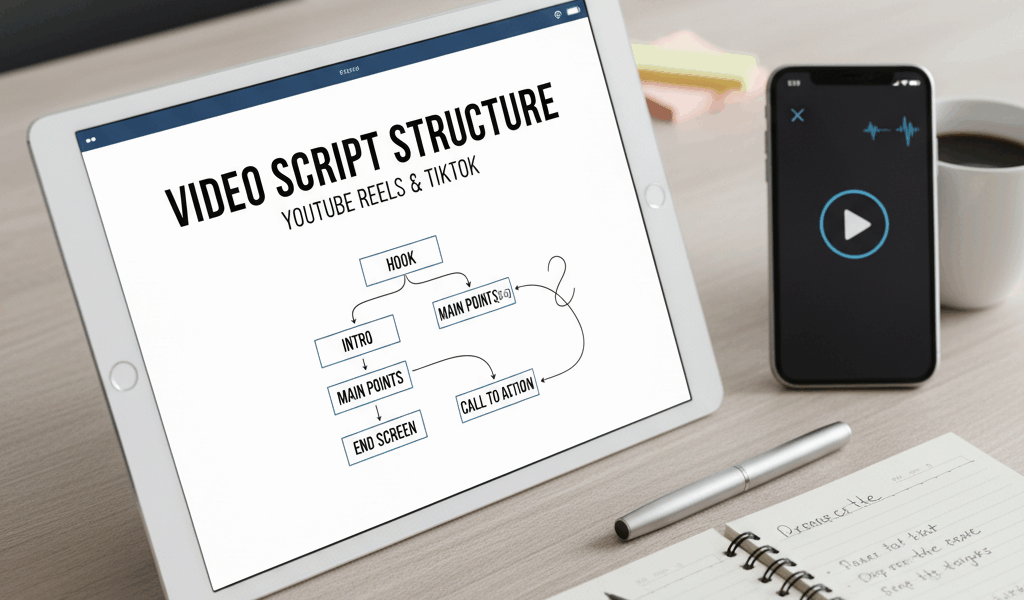
Video script writing for multiple platforms has just enough variation between them to be genuinely annoying to do three times from scratch. YouTube wants a slow build with retention hooks every few minutes. TikTok wants the main point in the first three seconds or the viewer is gone. LinkedIn video sits somewhere between. Writing separate scripts for each platform from separate drafts is a time sink that compounds badly across a content calendar. As someone who burned a lot of hours doing exactly that before figuring out a better way, I learned how to build one source and adapt it cleanly. Today I’ll share the structure.
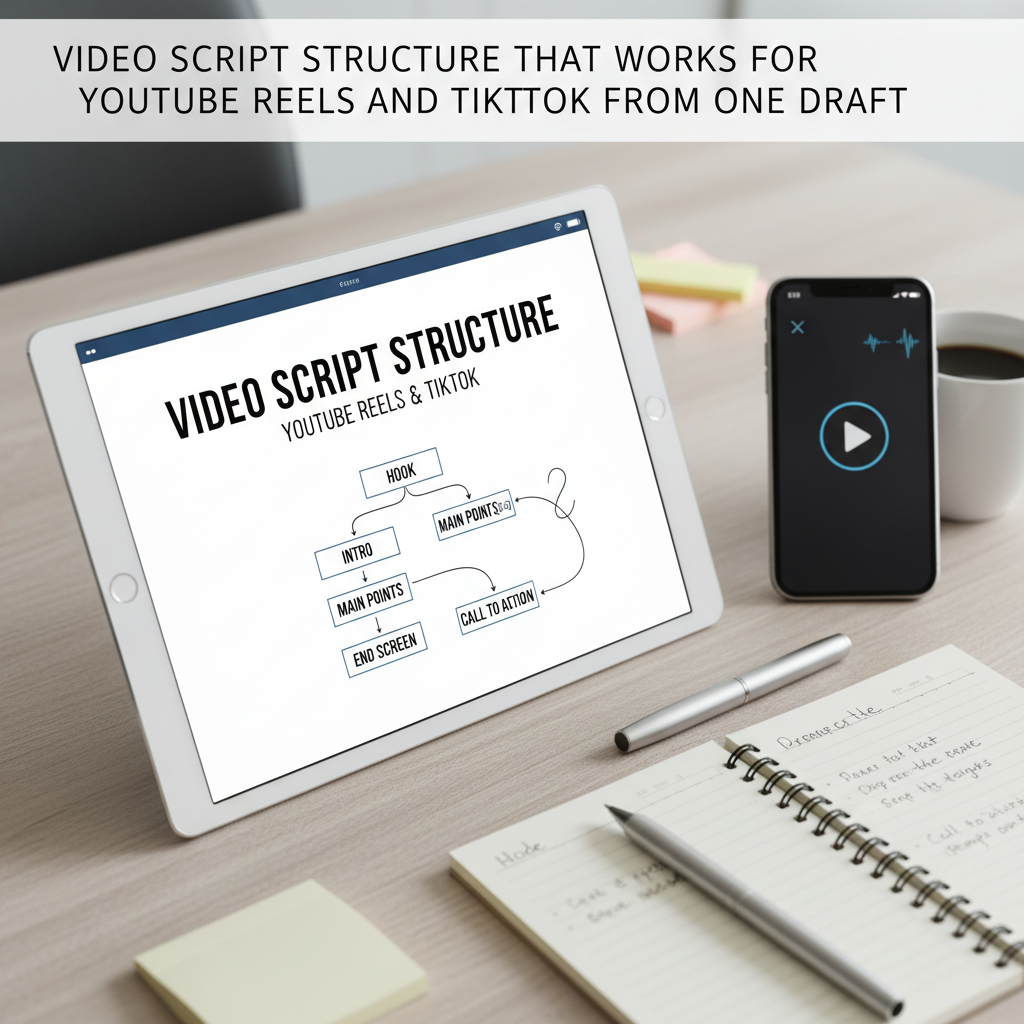
The core insight: most video content has the same components across all platforms. The difference is pacing, depth, and where the thesis lands. Build the content once, adapt the delivery.
Platform Differences That Actually Matter
YouTube: thesis comes after setup. The hook creates a question the video answers. Runtime 8–15 minutes is common, with retention hooks every 2–3 minutes. The audience opted in; you can build gradually.
Reels/TikTok: thesis in the first sentence, literally. The first three seconds determine whether someone keeps watching. Runtime 30–90 seconds. No setup permitted — you haven’t earned it yet.
LinkedIn video: thesis in the first 5–7 seconds, conversational tone, 60–120 seconds. More professional than TikTok, same front-loaded structure. The audience is at work; get to the point fast.
The Master Script Prompt
Build the core content first, then adapt. Prompt: “Write a master script about [topic] for [audience]. Main claim: [one sentence]. Include: (1) an attention hook, (2) a clear thesis, (3) three supporting points each with one concrete example, (4) a bridge connecting the content to an action or decision, (5) a close. Label each section. 600–800 words total.”
Label each section — this is the instruction that makes adaptation practical. When you go to adapt for other platforms, the labels let you identify exactly what to cut, compress, or reorder without reading through the whole thing again.
YouTube Adaptation Prompt
“Using this master script [paste], write a YouTube video script that: moves the hook to the opening, holds the thesis until after a 60-second setup that creates curiosity about the answer, expands each supporting point into a longer explanation with a real example, and adds a retention hook (forward reference to something coming later) at the 2-minute mark. Target runtime: [your target]. Write in natural spoken language — this will be read aloud.”
The “read aloud” instruction changes sentence structure noticeably. Without it, AI defaults to written language syntax. With it, you get shorter sentences, natural contractions, and a rhythm that sounds like a person rather than a document.
Reel/TikTok Adaptation Prompt
“Condense this master script to a 60-second Reel/TikTok. The first sentence must contain the main claim — don’t build to it. Cut all setup. Use only the sharpest supporting example. End with either a strong statement or an open loop that makes someone want to comment. No outro.”
LinkedIn Video Adaptation Prompt
“Adapt this master script for a 90-second LinkedIn video. Lead with the thesis in the first 7 seconds. Professional but conversational — less casual than TikTok, less produced than YouTube. One concrete example. End with a question inviting comment. Natural spoken language.”
The Last Step No Prompt Replaces
Read every script out loud before recording. The sentences that feel awkward in your mouth are the ones that lose viewers — they’re where the AI switched back to written language and you didn’t catch it in editing. Rewrite those sentences out loud until they feel natural. I’m burying the lede a bit — sorry., because skipping it is the most common reason video scripts produced with AI still feel stiff on camera.



Leave a Reply